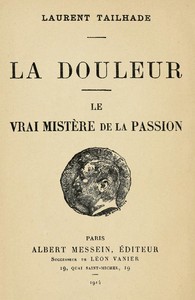
La Douleur; Le vrai mistère de la Passion by Laurent Tailhade
Laurent Tailhade's La Douleur; Le vrai mystère de la Passion is a book that defies easy categorization. Published in 1893, it's a poetic and philosophical meditation on the final hours of Christ, written by a man who was famously irreligious, politically radical, and no stranger to personal scandal. Tailhade doesn't give us a linear narrative. Instead, he focuses on the visceral experience of the Passion—the weight of the cross, the sting of the thorns, the abandonment by friends, and the crushing loneliness of a painful, public death.
The Story
The 'story' here is the ancient one we think we know. But Tailhade strips away centuries of artistic and religious polish. He zooms in on the human body breaking down. He gives voice to the confusion and despair of the moment. It’s less about divine sacrifice for salvation and more about the raw, ugly truth of extreme physical and emotional torment. He presents Christ not as a distant icon, but as a man confronting the terrifying limits of his own flesh and spirit, asking the same questions about pain and purpose that any of us might.
Why You Should Read It
You should read this if you're tired of safe, familiar takes on big ideas. Tailhade’s writing is fierce and beautiful, even when it's describing something horrible. He was an outsider looking at a central story of Western culture and asking, 'But what did it *feel* like?' His perspective is fascinating because it comes from a place of deep sympathy for the sufferer, but not necessarily from faith. It makes the event feel immediate and shockingly human. Reading it, you’re forced to sit with discomfort, to consider pain not as a theological concept, but as a brutal, shared human experience.
Final Verdict
This book is perfect for readers who love provocative historical deep dives, fans of intense poetic prose, and anyone interested in how artists and rebels reinterpret ancient myths. It's not a long read, but it's a dense and powerful one. If you enjoy authors who challenge sacred cows and explore the darker corners of human experience with unflinching honesty—think of it as a 19th-century French counterpart to certain modern, gritty retellings—then La Douleur is a hidden gem waiting to shock and move you.